Search Engine Optimization (SEO) has evolved dramatically in recent years, shifting from keyword-centric strategies to a more nuanced approach centered on search intent. Understanding and aligning content with user intent is now a cornerstone of ranking success, driving organic traffic, engagement, and conversions. For advanced SEO practitioners, mastering search intent is not just about ranking higher—it’s about delivering value to users and aligning with Google’s mission to provide relevant, high-quality results.
This comprehensive guide explores how to create blog posts optimized for search intent, covering intent types, research strategies, content creation, and optimization techniques. Whether you’re aiming to boost dwell time, capture featured snippets, or increase conversions, intent-focused content is the key to sustainable SEO success.
Understanding Search Intent
Defining Search Intent
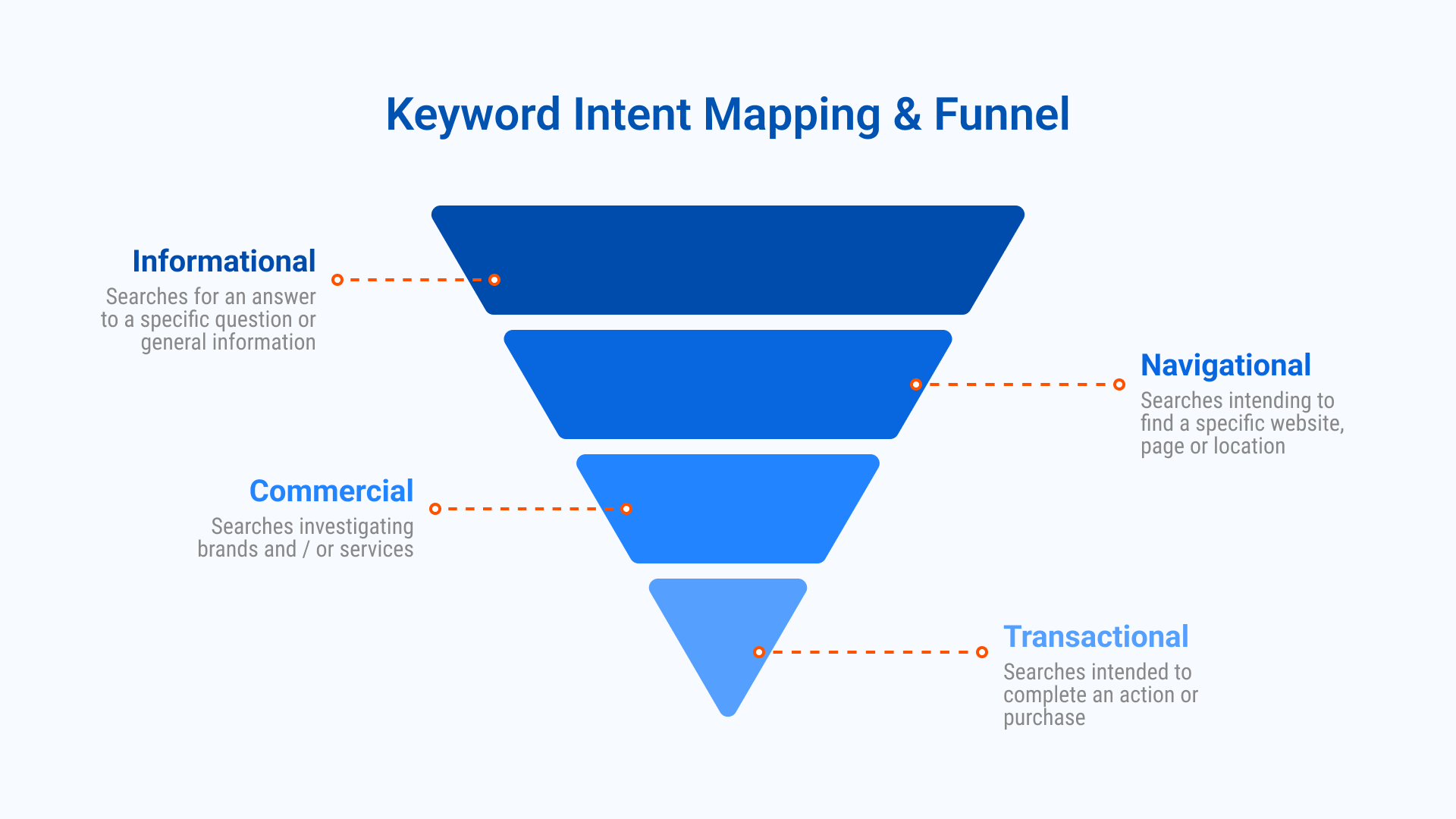
Search intent refers to the purpose behind a user’s query on a search engine. It reflects what users want to achieve, whether it’s finding answers, navigating to a specific site, making a purchase, or researching options. Aligning content with search intent ensures it meets user expectations, improving engagement and rankings.
| Intent Type | Definition & Characteristics | User Behavior | SEO Optimization Techniques | Why It Matters |
| Informational | Users seek knowledge, answers, or solutions. Often question-based (e.g., “how to,” “what is”) | Exploratory, seeking education or problem-solving. Early in the buyer’s journey (TOFU). Not ready to buy. | – Optimize for long-tail, question-based keywords. – Use FAQ or How-To schema for rich snippets. – Include semantic terms | Builds authority and trust, aligns with E-E-A-T, attracts TOFU traffic, and fosters long-term engagement. |
| Navigational | Users aim to find a specific website or page, using brand or page-specific terms. | Knows destination, seeks direct access. Expects seamless navigation to the target page. | – Target branded keywords in title tags and H1s. – Ensure fast load times. – Use Organization schema. | Reinforces brand visibility and loyalty, reduces friction, and prevents traffic loss to competitors or directories. |
| Transactional | Users are ready to act (e.g., purchase, sign up). | Decision-ready, seeks seamless conversion path. Bottom-of-funnel (BOFU) behavior. | – Target action-oriented keywords. – Use Product or Offer schema for Google Shopping. – Optimize for mobile and fast checkout. | Drives direct revenue, improves conversion rates, and aligns with Google’s actionable result goals. |
| Commercial | Users research before deciding, comparing options or evaluating features. | Middle-of-funnel (MOFU), comparing options to make informed decisions. | – Target comparative keywords (e.g., “best,” “vs”). – Use Review or Product schema. – Link to credible sources. | Bridges awareness to conversion, builds trust, and positions the brand as an authority. |
Figure: Types of Search Intent
Evolution of Search Intent in SEO
Google’s algorithm updates, such as BERT and RankBrain, have prioritized understanding user intent over keyword matching. These advancements analyze natural language to deliver results that align with user goals, moving away from keyword stuffing to user-focused SEO. This shift emphasizes creating content that answers user queries comprehensively, enhancing relevance and authority.
Why Intent Matters
Aligning content with search intent improves user experience by delivering exactly what users seek, reducing bounce rates and increasing dwell time. It also aligns with Google’s goal of providing relevant results, boosting rankings and visibility. For instance, intent-focused content can capture People Also Ask boxes or knowledge panels, driving more clicks.
Researching Search Intent
Keyword Research with Intent in Mind
Effective keyword research starts with identifying intent-driven keywords. Tools like Ahrefs, SEMrush, and AnswerThePublic help uncover queries aligned with specific intents. For example:
- Informational: “What is search intent in SEO?”
- Transactional: “Purchase Ahrefs subscription”
- Commercial: “Ahrefs vs SEMrush comparison”
Analyze SERP features like featured snippets, People Also Ask, or shopping results to infer intent. For instance, a query triggering a featured snippet likely has informational intent, while shopping ads suggest transactional intent.
Competitor Analysis
Studying top-ranking pages for target keywords reveals how competitors align content with intent. Use tools like Ahrefs or SEMrush to analyze content structure, word count, and backlinks. Identify gaps—such as missing pain points or outdated information—to create unique, intent-focused posts that outperform competitors.
User Behaviour Insights
Leverage Google Analytics and Google Search Console to track metrics like click-through rates (CTR), time on page, and bounce rates. High bounce rates may indicate a mismatch between content and intent. Additionally, social listening tools like Brandwatch or monitoring discussions on digital platforms can reveal trending topics and user pain points.
Advanced Techniques
- Semantic Search Analysis: Use tools like MarketMuse or Semrush to identify related terms and topics, ensuring content covers the full scope of a query’s intent.
- Intent Clustering: Group related keywords by intent to create content hubs. For example, cluster “SEO tools,” “best SEO tools 2026,” and “SEO software reviews” into a single topical hub to boost authority.
Crafting Intent-Focused Blog Posts
Structuring Content for Different Intents-Tailor content structure to match intent:
- Informational: Create comprehensive guides, how-to articles, or listicles with actionable insights. For example, a post on “How to Perform Keyword Research” should include step-by-step instructions and visuals.
- Navigational: Optimize for branded searches with clear CTAs and internal links to key pages..
- Transactional: Develop product-focused content with strong CTAs, customer reviews, or comparison tables to drive conversions.
- Commercial: Write in-depth comparisons, case studies, or pros/cons lists to aid decision-making.
Writing for User Experience
Prioritize readability with short paragraphs, bullet points, and descriptive subheadings. Incorporate visuals like infographics or charts to enhance engagement, as visuals can increase time on page by up to 80%. Address user pain points directly to build trust and establish authority.
Content Depth and Quality
For informational intent, aim for long-form content (2,000+ words) to cover topics exhaustively. Include primary research, expert quotes, or data-driven insights to differentiate your content. For example, cite Backlinko’s SEO studies to add credibility. Align with Google’s E-E-A-T guidelines by showcasing author expertise through bio sections and linking to credible sources.
On-Page SEO Optimization for Intent
Title Tags and Meta Descriptions
Craft compelling, intent-driven title tags and meta descriptions. Include modifiers like “2026,” “Best,” or “How to” to match user expectations. For example:
- Informational: “How to Optimize Blog Posts for Search Intent in 2026”
- Transactional: “Buy the Best SEO Tools for 2026 – Start Now”
Keep titles under 60 characters and meta descriptions under 160 characters for optimal SERP display.
URL Structure and Headings
Use clean, descriptive URLs reflecting the primary keyword and intent. Optimize H1-H3 tags with intent-driven subtopics for scannability, such as “Why Search Intent Matters” or “How to Research Intent.”
Internal and External Linking
Link to related content to create topical clusters, boosting topical authority. Reference high-authority external sources like Moz or Search Engine Journal to enhance credibility.
Schema Markup and Structured Data
Implement schema markup (e.g., FAQ, How-To, Article) using JSON-LD to provide context to search engines. For example, FAQ schema can boost visibility for informational queries by capturing rich snippets. Use tools like Schema.org or Google’s Structured Data Testing Tool to validate markup.
Measuring and Refining Intent-Driven Content
Key Performance Indicators (KPIs)
Track the following KPIs to measure success:
- Organic Traffic Growth: Monitor traffic increases via Google Analytics.
- Keyword Rankings: Use SEMrush or Ahrefs to track ranking improvements.
- Engagement Metrics: Measure dwell time, pages per session, and bounce rate.
- Conversion Metrics: For transactional or commercial intent, track sign-ups, purchases, or form submissions.
Performance Tracking
Use Google Analytics to assess intent alignment. For example, high dwell time on informational posts indicates content relevance. Track SERP feature captures, like featured snippets or knowledge panels, using tools like RankTracker.
Iterative Optimization
Analyze underperforming posts using user feedback and analytics. Update content to reflect changing search trends or algorithm updates, such as Google’s 2026 core updates. Refresh old posts with new data or visuals to maintain relevance.
Advanced Strategies for Scaling Content SEO
Content Hubs and Topic Clusters
Build interconnected blog posts around a core topic, like “SEO Strategies,” to dominate specific intents. For example, create a pillar page on “Content SEO” with linked posts on keyword research, intent optimization, and link building.
Voice Search and Intent
Optimize for conversational, question-based queries (e.g., “What is the best SEO tool?”) to align with voice search. Use natural language and long-tail keywords, as voice searches are becoming more and more prominent with time and they contribute to 50% of all queries.
AI and Automation in Content SEO
Leverage AI tools like Jasper for intent prediction and content optimization. Automate keyword research and content audits with tools like SEMRush’s Content Audit to scale strategies efficiently.
Future Trends in Search Intent
AI-driven search, like Google’s Gemini, will further refine intent analysis. The rise of visual and video content, such as YouTube Shorts or TikTok, will also shape intent-driven engagement, requiring SEO practitioners to adapt formats.
Conclusion
Aligning blog posts with search intent is critical for SEO success, driving traffic, engagement, and conversions. By understanding user needs, researching intent-driven keywords, and crafting high-quality content, you can dominate SERPs and build authority.
Actionable Takeaways
- Conduct intent-focused keyword research and competitor analysis using tools like Ahrefs or SEMrush.
- Create user-centric content tailored to specific intents, prioritizing readability and E-E-A-T.
- Continuously measure and refine content based on performance data from Google Analytics and Search Console.
Audit your existing content for intent alignment using our services and implement these advanced strategies to stay ahead in 2026.